
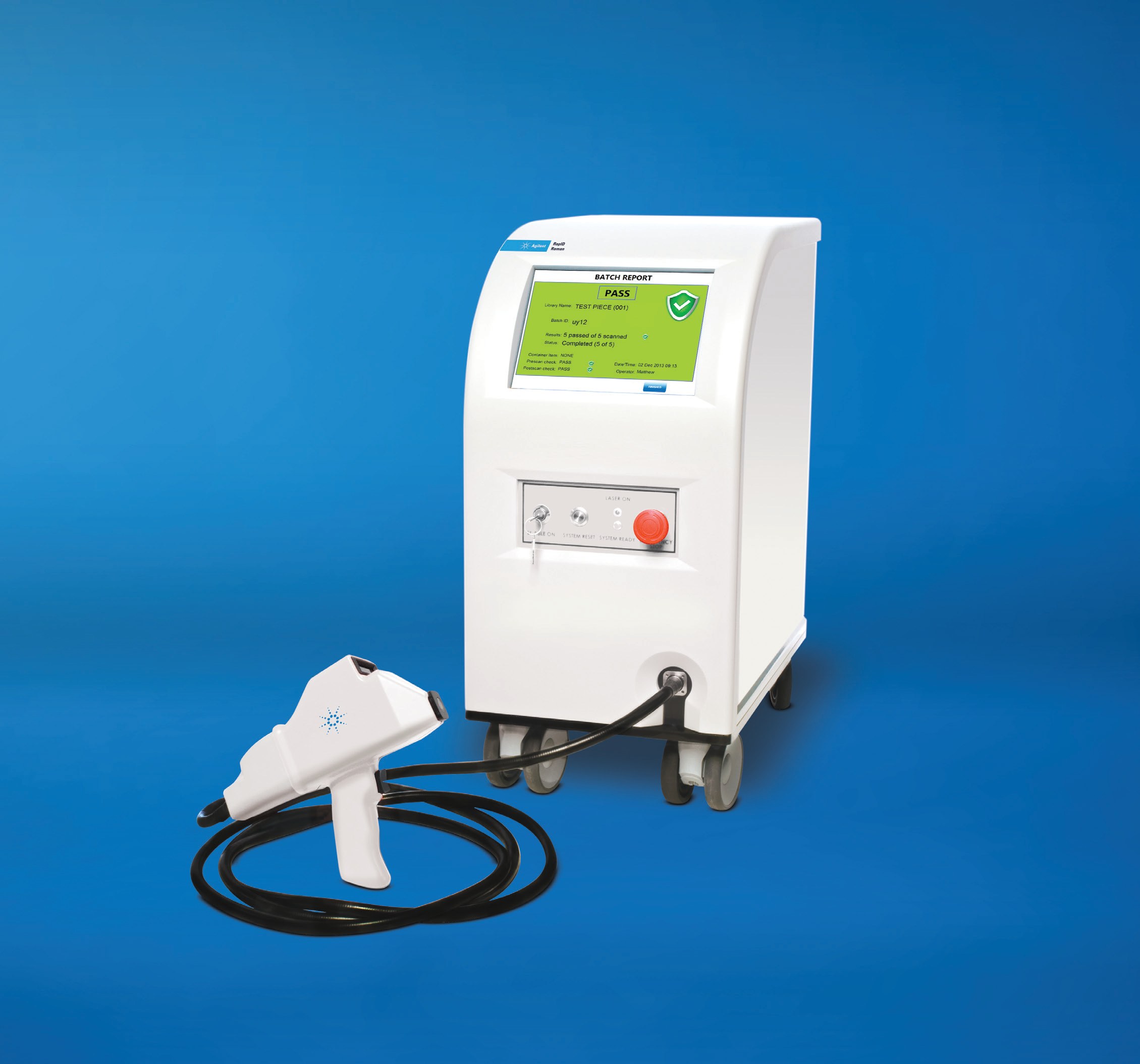
Agilent Technologies Mobile Raman Spectrometer, Raw Material ID, RapID
Agilent Technologies Mobile Raman Spectrometer, Raw Material ID, RapID — Molecular spectroscopy.
The RapID is a mobile Raman spectrometer using spatially offset Raman spectroscopy (SORS) at 830 nm excitation for raw material identification through unopened containers. It is distinguished within the series by its magnetic nose-adapter system, including a flat adapter and an 82 mm cylindrical-bottle adapter, plus an integrated bar code scanner. It serves incoming-goods identity verification in pharmaceutical manufacturing.
Full specifications
| Nose Adapter, Cylindrical Bottle | 82 mm |
| Spectroscopy technology mfr | SORS SORS |
| Excitation wavelength mfr | 830 nm |
| Nose adapter, flat mfr | Flat Flat |
| Bar code scanner mfr | 1 D |
| Nose adapter retention mfr | Magnetic retain and release system system |
Description
Construction and positioning
- The RapID is the mobile, through-barrier raw-material ID configuration of the Agilent Raman pharmaceutical analysis line, built around SORS with 830 nm excitation.
- Nose adapters attach and release magnetically; the documented set includes a flat general-purpose adapter and an 82 mm cylindrical-bottle adapter, with a 44 mm cylindrical-bottle adapter listed in the brochure scope.
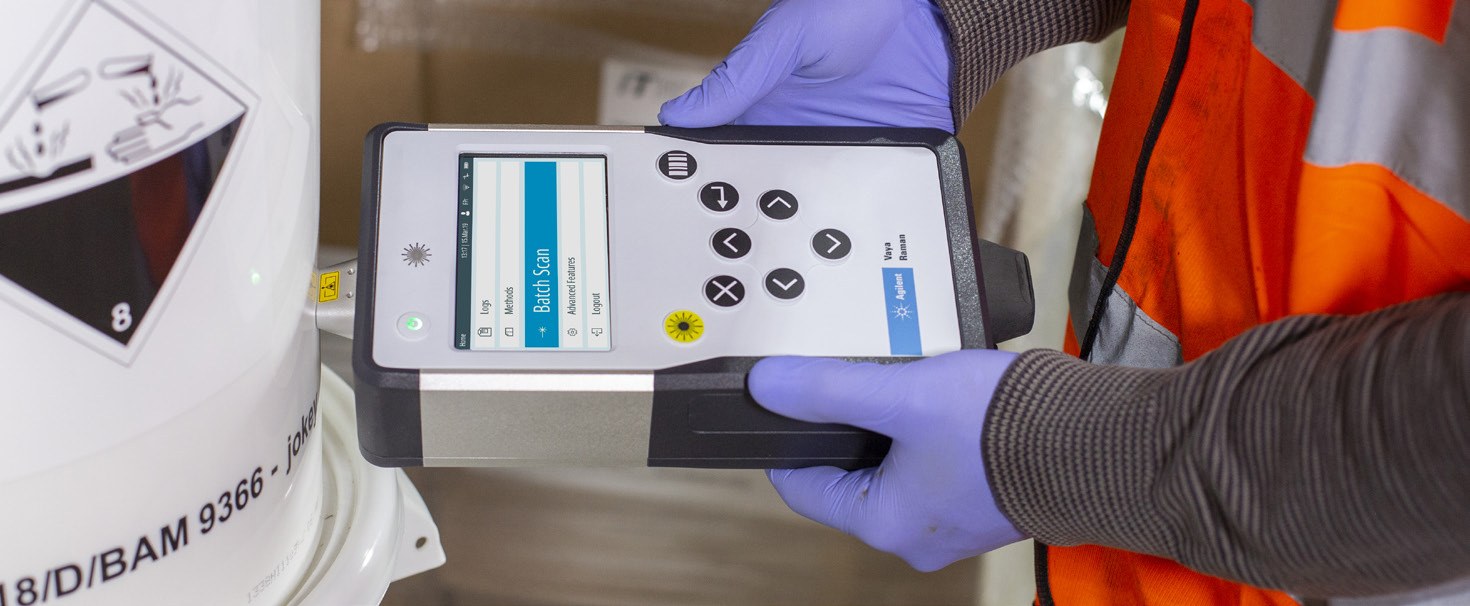
- A bar code scanner is integrated for container/raw-material identification.
- Sibling models differ in measurement geometry: the handheld through-container Raman unit and the TRS100 are separate configurations, not variants of this nose-adapter system.
Measurement behavior
- SORS acquisition through the container wall is the defining operating mode; the flat adapter addresses general surfaces, while the 82 mm adapter is sized to cylindrical bottles of that diameter.
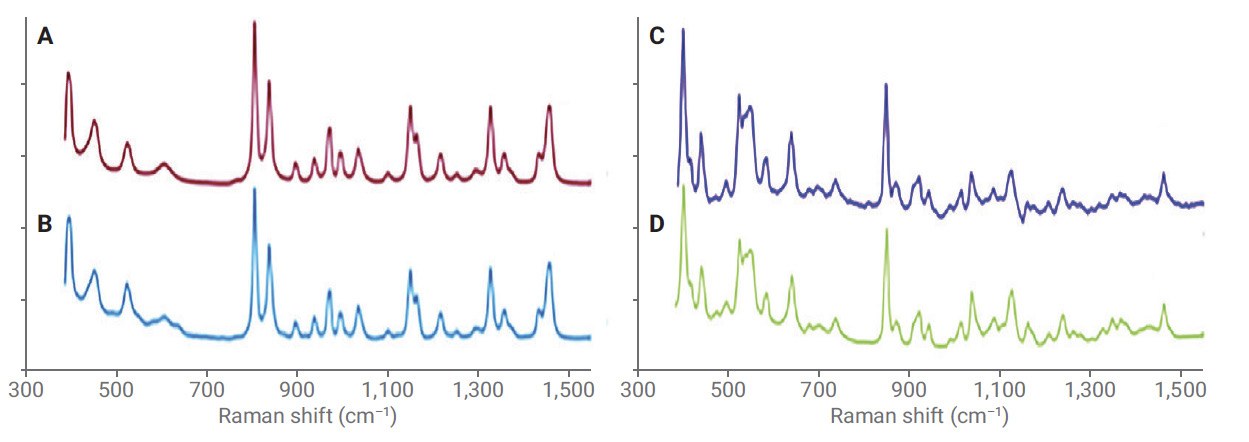
- No digitized curves or quantitative performance data were supplied, so spectral range, resolution and acquisition times cannot be stated here.
Installation and operation
- The supplied document digests contain no sections on electrical connection, control interfaces, or installation; those specifics must be taken from the full instruction manual rather than inferred.
Integration & Operating Notes
The 82 mm adapter is dimensioned for cylindrical bottles of that diameter and the flat adapter for general surfaces; using an adapter outside its intended container geometry compromises the through-barrier measurement path. Confirm container diameter and shape before selecting the adapter.
Adapters are retained and released magnetically, so the mating surfaces and magnet retention should be inspected for damage or contamination as part of routine service; a loose or damaged adapter invalidates the measurement geometry. Keep spare adapters for each container format in use.
An integrated bar code scanner links each measurement to its container or material record; the interface and data format for transferring scan and spectral results to the site system are not described in the supplied digests and must be confirmed against the full manual.
Selection & Integration Q&A
Choose the RapID when raw-material ID is performed at the goods-receipt point with interchangeable nose adapters for flat surfaces and 82 mm cylindrical bottles plus integrated bar code scanning. The handheld sibling is a different measurement configuration; select it only if its through-container geometry matches your containers, since adapter formats are not interchangeable across models.
The container must fit the mounted adapter: the 82 mm adapter is sized for cylindrical bottles of that diameter, and the flat adapter covers general surfaces. Confirm bottle diameter and wall material before measurement, and verify that the adapter seats fully on its magnetic retention, since a mismatched or poorly seated adapter breaks the SORS measurement path.
The supplied brochure and technical overview digests contain no environmental, ingress-protection, or duty-cycle specifications, so operating temperature, humidity and continuous-use limits cannot be quoted from these documents. Obtain them from the full instruction manual before committing the unit to a goods-receipt bench or warehouse location.
Plan for the nose-adapter set: flat, 82 mm cylindrical-bottle, and 44 mm cylindrical-bottle adapters are separate items, and magnetic retention surfaces should be inspected routinely for damage or contamination. The digests give no service intervals, calibration schedule, or cable/consumable list, so these must be confirmed with Agilent service documentation.
Dimensional Drawings & Technical Documentation
Dimensional drawings
Click drawing to inspect vector dimensions