
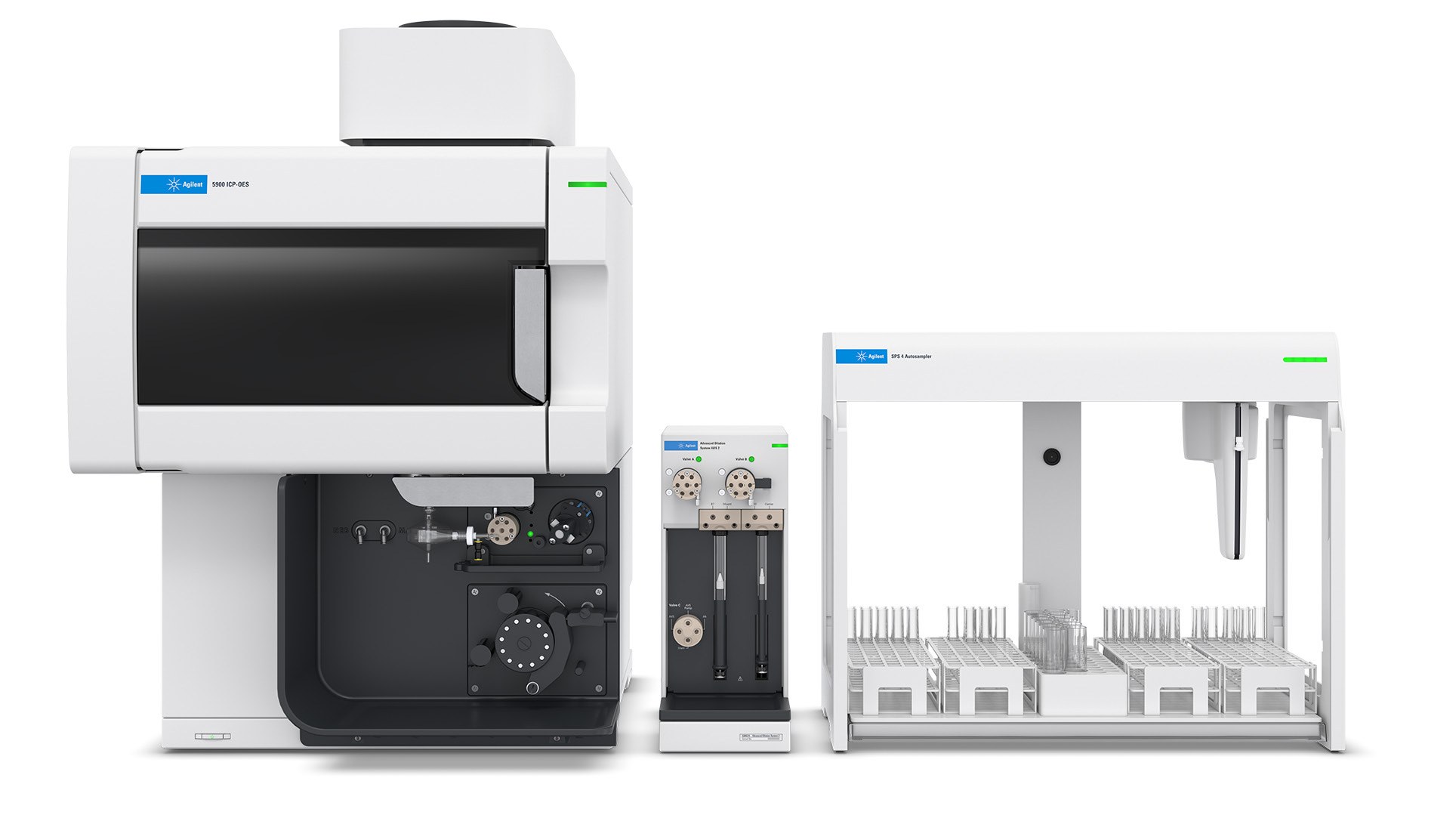
Agilent Technologies ADS 2, auto dilution system
Agilent Technologies ADS 2, auto dilution system — Atomic spectroscopy.
The ADS 2 is a two-syringe autodilutor for Agilent 5800/5900 ICP-OES and 7850/7900/8900 ICP-MS systems, operating with the Advanced Valve System (AVS). It handles up to 360 samples across four racks, with a maximum dilution factor of 400 from a single stock solution. It doubles sample throughput versus the SPS 4 autosampler and is controlled by ICP Expert v7.7+ or ICP-MS MassHunter v5.3+.
Full specifications
| Sample Capacity | 360 samples |
| Maximum dilution factor mfr | 400 fold |
| Dilution range of single stock solution mfr | 1 x |
| Autosampler rack capacity mfr | four sample rack rack |
| Sample capacity increase vs SPS 4 mfr | 50 |
| Sample throughput mfr | doubles doubles |
| Compatible ICP-OES instruments mfr | 5800 |
| Compatible ICP-MS instruments mfr | 7850 |
| ICP-OES software version mfr | 7.7 above |
| ICP-MS software version mfr | 5.3 above |
| Syringe configuration mfr | two-syringe syringe |
| Maximum dilution factor (single stock solution) mfr | 1 x |
| Sample rack count mfr | six sample rack rack |
| Sample throughput increase mfr | doubles doubles |
| maximum dilution factor mfr | 400 fold |
| SPS 6 sample capacity mfr | 540 samples |
| Width | 15.8 cm |
Description
Construction and series positioning
The ADS 2 is a two-syringe autodilution module integrated into the Agilent ICP workflow automation family alongside the AVS 7 / AVS MS switching valves and SPS 4 / SPS 6 autosamplers. It is not a standalone sampler: it is specified for the 5800 and 5900 ICP-OES and the 7850, 7900 and 8900 ICP-MS, and it works with the Advanced Valve System. Its distinguishing modification within the series is capacity and throughput: four sample racks for 360 samples (a 50% increase over the SPS 4) and doubled sample throughput, with a maximum dilution factor of 400 from a single stock solution.
Dilution behavior
Dilution is performed by the two-syringe configuration, which separates sample and diluent handling. The single-stock dilution range reaches a factor of 400; the facts do not define intermediate dilution ratios or precision, so no calibration or accuracy figures are stated here. No digitized curve points were supplied, so behavior under varying dilution demand cannot be characterized beyond the stated maximum.
Control and integration
The unit is driven by the host spectrometer software, not a separate controller: ICP Expert v7.7 or above for ICP-OES, and ICP-MS MassHunter v5.3 or above for ICP-MS. Physical width is 15.8 cm. The document digests contain no sections or actionable engineering facts on installation, connection or operating modes, so no further installation detail is asserted.
Integration & Operating Notes
The ADS 2 is controlled from the spectrometer software, so the installed ICP Expert must be v7.7 or higher (ICP-OES) or ICP-MS MassHunter v5.3 or higher (ICP-MS). Verify the version before commissioning; an older build will not expose the autodilutor functions and the module cannot be operated independently.
The ADS 2 is specified only for the Agilent 5800 and 5900 ICP-OES and the 7850, 7900 and 8900 ICP-MS, and it operates together with the Advanced Valve System. An instrument outside this list, or a configuration without the AVS, is not covered by the published scope and must be checked with the vendor.
Samples requiring more than a 400-fold dilution from a single stock solution fall outside the stated range and need a different preparation route. Plan method dilution tables within this ceiling; the facts give no intermediate-ratio accuracy data, so verify precision for each method during validation.
Selection & Integration Q&A
Choose the ADS 2 when automated in-line dilution up to 400-fold and higher throughput are needed: it holds 360 samples in four racks, a 50% capacity increase over the SPS 4, and doubles sample throughput. The SPS 4 remains the simpler sampler where dilution is done offline.
The instrument must be a supported model (5800/5900 ICP-OES or 7850/7900/8900 ICP-MS), fitted with the Advanced Valve System, and running ICP Expert v7.7+ or ICP-MS MassHunter v5.3+. Without the AVS or the minimum software version the autodilutor is outside its specified configuration.
Up to 360 samples can be loaded across four racks per run, and any single sample can be diluted by at most a factor of 400 from one stock solution. Methods needing greater dilution must be prepared separately; no intermediate-ratio accuracy figures are published.
The supplied documents define the module, its host-software requirements and AVS pairing but list no accessories, cables or consumables in the base delivery. Syringe and valve spares and any connection kits should be confirmed with the vendor and budgeted separately.
Dimensional Drawings & Technical Documentation
Dimensional drawings
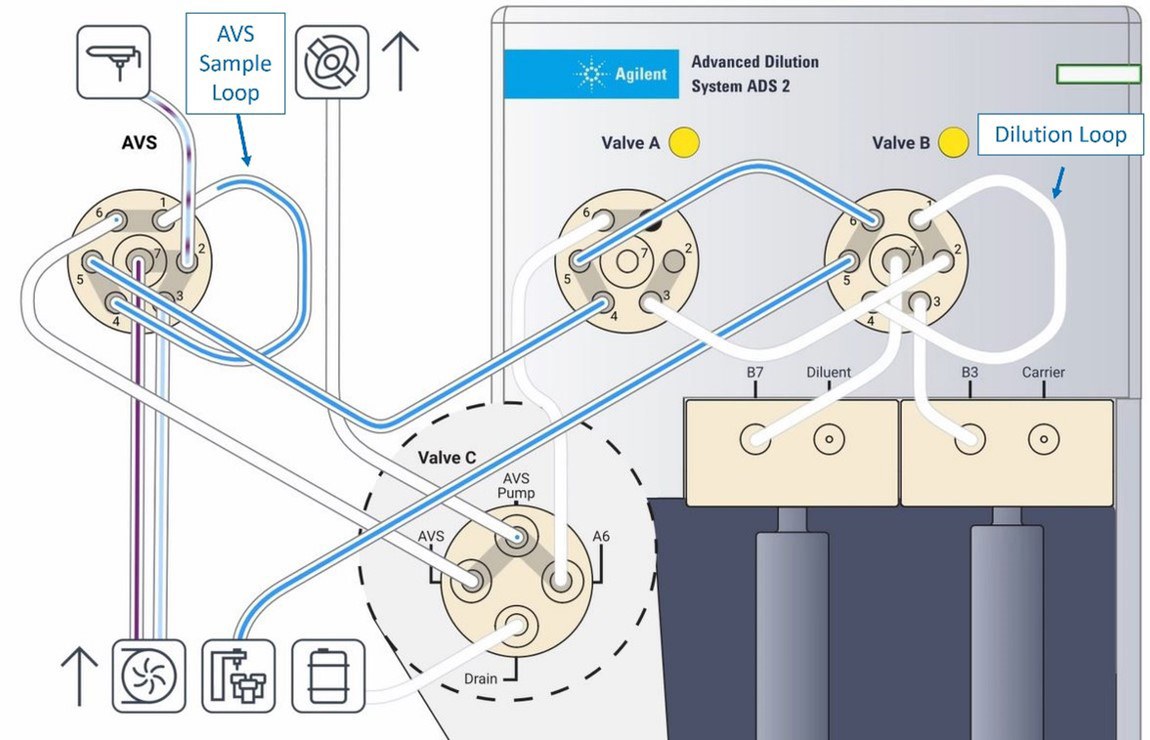
Click drawing to inspect vector dimensions