
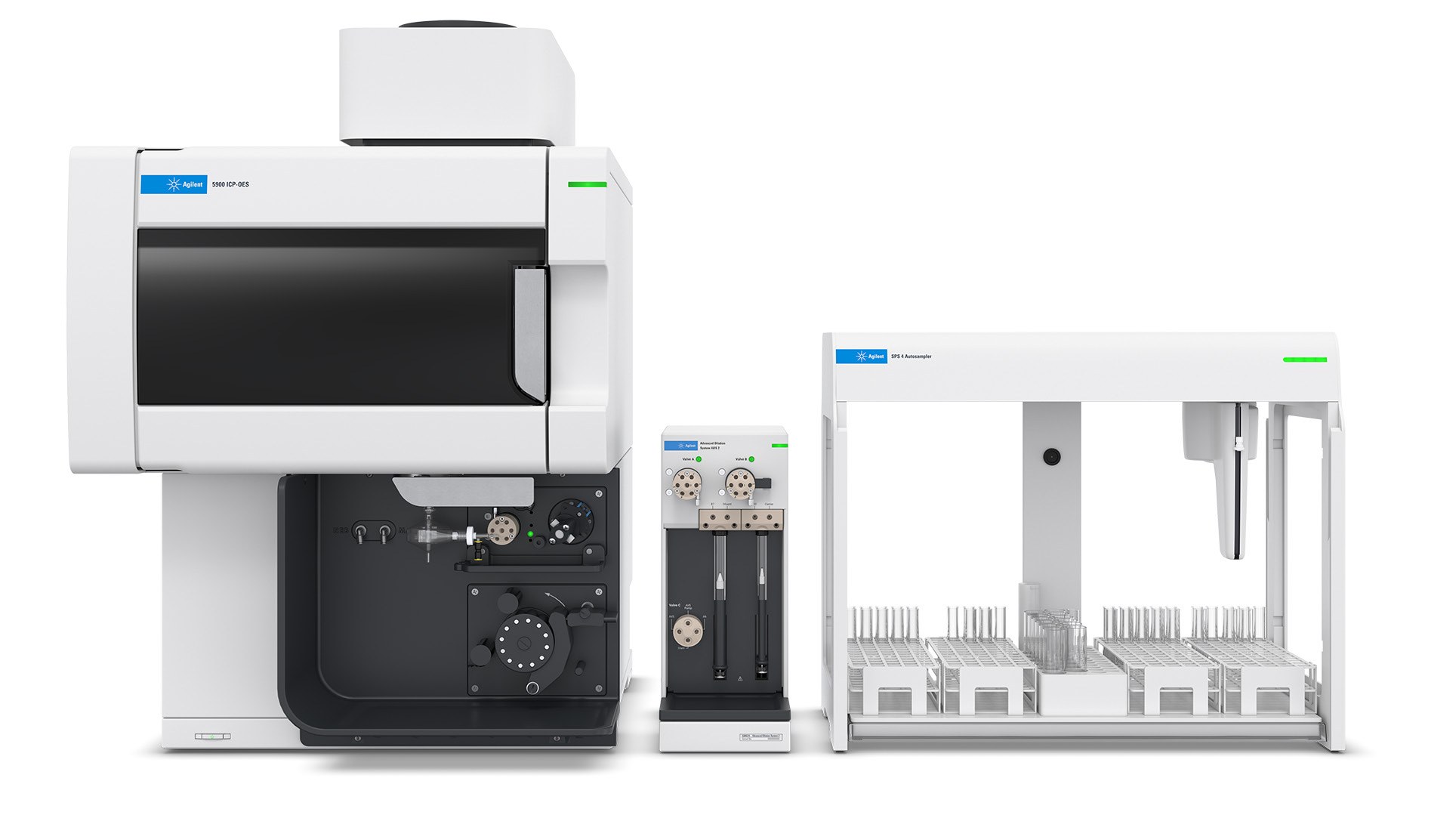
Agilent Technologies icp-oes-automation-systems
Agilent Technologies icp-oes-automation-systems — Atomic spectroscopy.
The Agilent ICP Workflow Automation System is a two-syringe autodilutor configuration (ADS 2) integrated with a four-rack autosampler, providing 360-sample capacity and up to 400-fold dilution from a single stock solution. It is controlled by ICP Expert v7.7+ or MassHunter v5.3+ and doubles throughput versus the SPS 4 while increasing capacity by 50%. It serves automated sample preparation and introduction for 5800 ICP-OES and 7850 ICP-MS instruments.
Agilent Technologies Automation Systems Series — Model Comparison & Selection
| Model | Sample capacity | Width, cm |
|---|---|---|
| icp-oes-automation-systems Current | 360 | 15.8 |
| icp-ms-automation-systems | 360 | 15.8 |
Full specifications
| Sample Capacity | 360 samples |
| Maximum dilution factor mfr | 400 fold |
| Dilution range of single stock solution mfr | 1 x |
| Autosampler rack capacity mfr | four sample rack rack |
| Sample capacity increase vs SPS 4 mfr | 50 |
| Sample throughput mfr | doubles doubles |
| Compatible ICP-OES instruments mfr | 5800 |
| Compatible ICP-MS instruments mfr | 7850 |
| ICP-OES software version mfr | 7.7 above |
| ICP-MS software version mfr | 5.3 above |
| Syringe configuration mfr | two-syringe syringe |
| Maximum dilution factor (single stock solution) mfr | 1 x |
| Sample rack count mfr | six sample rack rack |
| Sample throughput increase mfr | doubles doubles |
| maximum dilution factor mfr | 400 fold |
| SPS 6 sample capacity mfr | 540 samples |
| Width | 15.8 cm |
Description
Construction and series positioning
- This modification is the ICP workflow automation package built around the ADS 2 two-syringe autodilutor and a four-rack autosampler, not a standalone instrument.
- Within the automation series it is the ICP-OES/ICP-MS front-end variant; the sibling ICP-MS automation system covers the same workflow for ICP-MS platforms.
- Sample capacity is 360 positions across four racks, a 50% increase over the SPS 4 autosampler, and the unit is 15.8 cm wide.
Dilution and throughput behavior
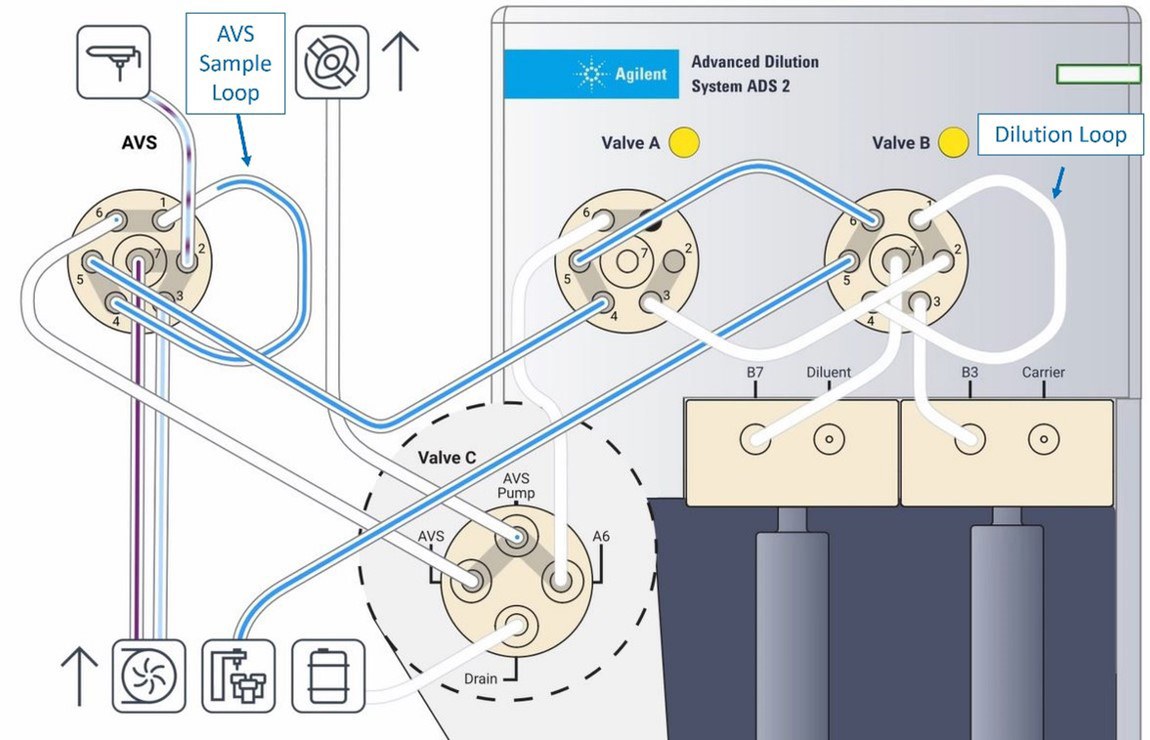
- Dilution is performed by the two-syringe ADS 2 architecture, with a maximum dilution factor of 400 and a single-stock dilution range of 1x.
- The system doubles sample throughput relative to the SPS 4 baseline.
- No digitized response curves are supplied; behavior is defined by the dilution range and rack capacity rather than by a performance curve.
Control and compatibility
- Control is via Agilent ICP Expert software version 7.7 or above for ICP-OES, and ICP-MS MassHunter version 5.3 or above for ICP-MS.
- Compatible instruments are the 5800 ICP-OES and 7850 ICP-MS; the ADS 2 also works with the Advanced Valve System (AVS).
- The brochure scope lists ADS 2, AVS 7/AVS MS switching valves, and SPS 4/SPS 6 autosamplers as the automation family, so the valve and autosampler are separate elements of the workflow.
Integration & Operating Notes
The two-syringe architecture reaches a maximum dilution factor of 400 with a single-stock dilution range of 1x. Samples requiring higher dilution or multi-stock serial dilution fall outside this configuration and need an off-line preparation step or a different dilutor setup.
The ADS 2 two-syringe dilutor and the AVS 7/AVS MS switching valve are distinct elements of the automation family. Syringe seals, tubing, and valve rotor consumables are not part of the base delivery and must be stocked separately for the dilution path to remain within its 400-fold specification.
Selection & Integration Q&A
Pick this configuration when the workflow runs on a 5800 ICP-OES or 7850 ICP-MS and needs 360-position capacity with up to 400-fold single-stock dilution. The ICP-MS automation sibling is the counterpart for ICP-MS-centric labs; confirm the instrument list before ordering.
The ADS 2 works with the Advanced Valve System (AVS 7 or AVS MS) and needs ICP Expert v7.7+ on ICP-OES or MassHunter v5.3+ on ICP-MS. The four-rack autosampler and the switching valve are separate elements of the automation family, so they must be specified alongside the dilutor.
The base system covers the ADS 2 two-syringe dilutor and four-rack autosampler. The AVS 7/AVS MS switching valve, syringe seals, tubing, and valve rotor consumables are separate items and should be stocked so dilution stays within the 400-fold maximum.
Dimensional Drawings & Technical Documentation
Dimensional drawings
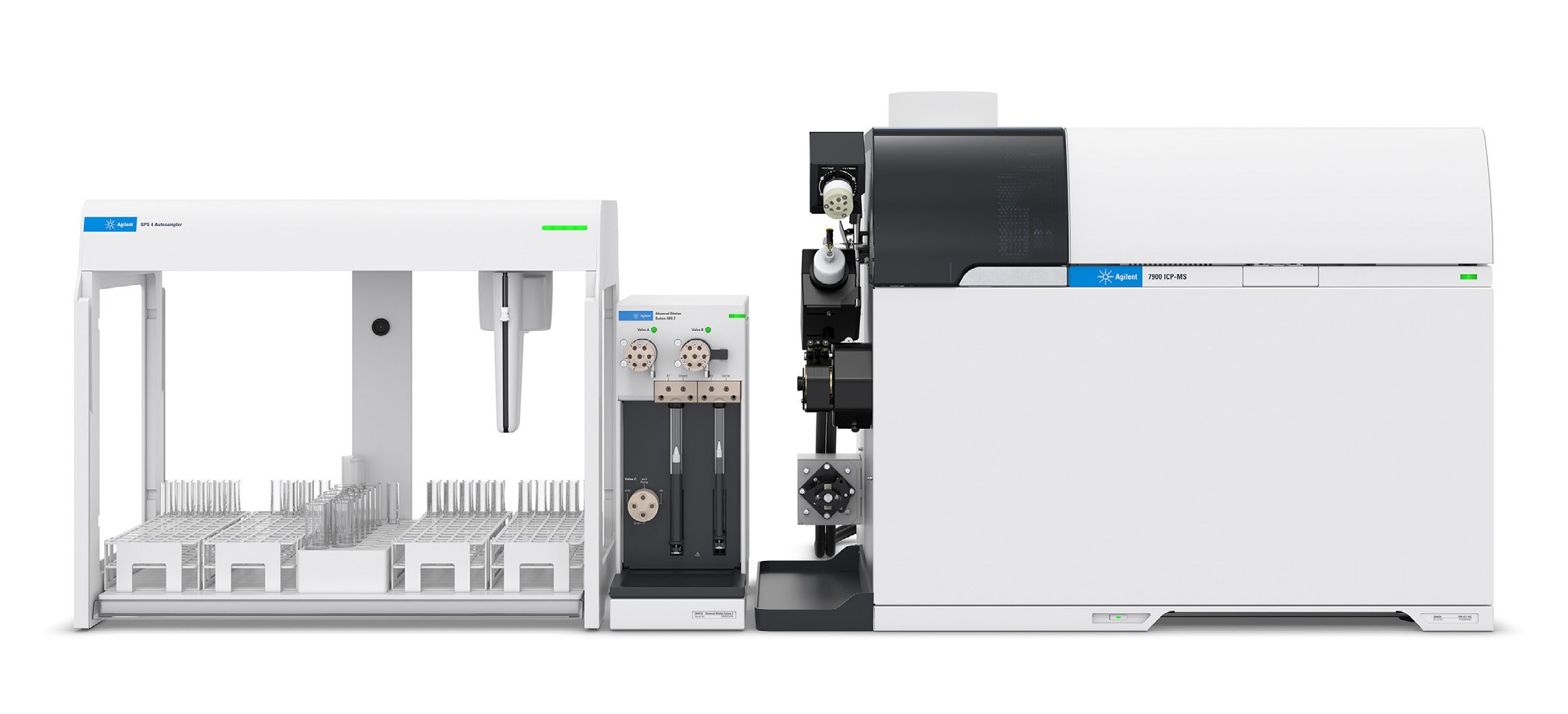
Click drawing to inspect vector dimensions