
Agilent Technologies 6560 Ion Mobility QTOF LC/MS, Collision Cross Section
Agilent Technologies 6560 Ion Mobility QTOF LC/MS, Collision Cross Section — Liquid chromatography mass spectrometry lc ms with Pumping speed 1.6×10⁻⁸ m³/h.
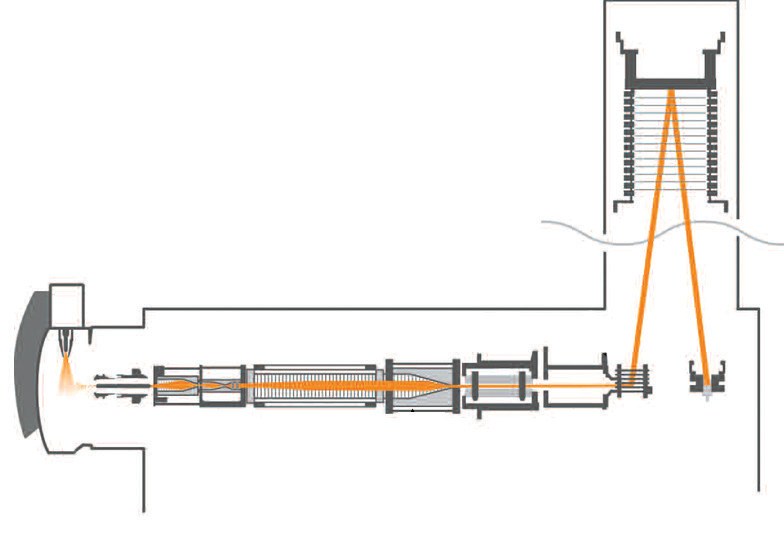
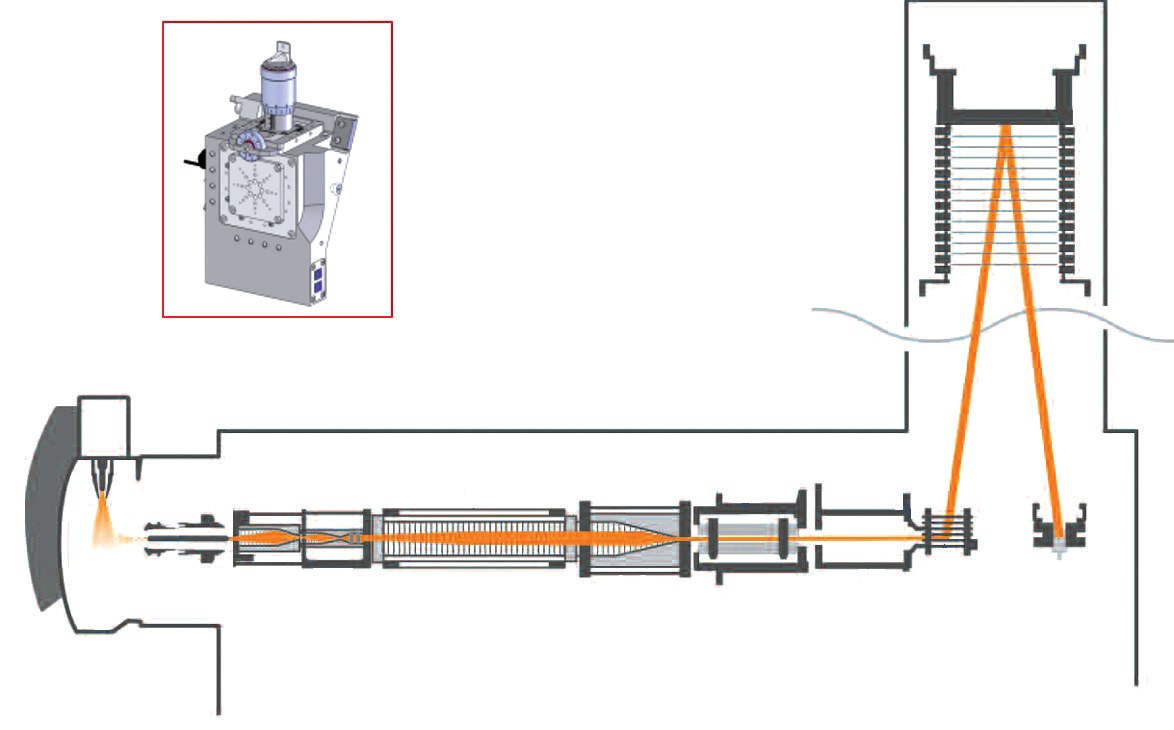
The Agilent 6560 ion mobility LC/Q-TOF is a hybrid quadrupole time-of-flight mass spectrometer with an 80 cm drift tube for ion mobility separation, configured here with a nanospray source for low-flow proteomics. It covers 100–1,700 m/z in MS mode and 50–1,700 m/z in ion mobility mode, distinguishing it from the 6530 Q-TOF and 6230 TOF siblings by adding gas-phase mobility dimension. Primary use is structural and phosphopeptide characterization in LC/MS workflows.
Agilent Technologies Quadrupole Time Of Flight LC MS Series — Model Comparison & Selection
| Model | Pumping speed, m³/h | Mass range | Acquisition rate, Hz | Autosampler temperature, °C | Column temperature, °C | Sample volume, milliliter |
|---|---|---|---|---|---|---|
| 6560 Ion Mobility QTOF LC/MS, Collision Cross Section Current | 1.6×10⁻⁸ | 100...1,700 | 10 | 4 | 45 | — |
| 6545XT AdvanceBio UHPLC QTOF, biopharmaceutical analysis | 3×10⁻⁵ | 100...10,000 | 1.0 | 4 | 60 | 5×10⁻⁴ |
| Electron capture dissociation for QTOF LCMS of proteins | 0.024 | — | 1 | 5 | 60 | 0.01 |
Full specifications
| Pumping speed | 266 nL/min |
| Acquisition Rate | 10 spectra/s |
| Column temperature | 45 °C |
| Instrument mfr | 6560 TOF |
| Ionization source mfr | Agilent nanospray source source |
| Sample mfr | BSA BSA |
| Sample concentration mfr | 20 mg/mL |
| Needle dimensions mfr | 360 length |
| Monomer m/z (charge 1) mfr | 66435 m/z |
| Dimer m/z (charge 1) mfr | 132869 m/z |
| Trimer m/z (charge 1) mfr | 199303 m/z |
| Tetramer m/z (charge 1) mfr | 265737 m/z |
| Collision energy slope mfr | 2 |
| Collision energy offset mfr | 3 |
| Max precursors per cycle mfr | 3 |
| Threshold for MS/MS mfr | 1000 counts |
| Isotope model mfr | Peptides Peptides |
| PhosphoMix dilution concentration mfr | 6.66 pmol/μL |
| Injection volume, digested α-casein mfr | 11 μL |
| Injection volume, digested β-casein mfr | 10 μL |
| Injection volume, phosphopeptide enrichment eluate mfr | 5 μL |
| Injection volume, PhosphoMixes mfr | 2 μL |
| Mass range | 100...1,700 m/z |
| Drift Tube Length | 80 cm |
| Ion mobility mode mass range mfr | 100...1,700 m/z |
| Isolation width mfr | 4 m/z |
| Mobile phase 1 mfr | 150 acetate |
| Mobile phase 2 mfr | 0.1 acid |
| High pressure funnel voltage mfr | 200 peak |
| Trapping funnel voltage mfr | 200 peak |
| High pressure funnel RF mfr | 100 V |
| Trap funnel RF mfr | 100 V |
| Drift tube exit voltage mfr | 250 V |
| Autosampler Temperature | 4 °C |
Description
Architecture and series positioning
- Hybrid quadrupole/TOF analyzer with an 80 cm drift tube for ion mobility separation, fed by an Agilent nanospray source (G1992A) in this configuration.
- Within the LC/MS series, the 6560 is the ion-mobility Q-TOF modification; the 6530 Q-TOF and 6230 TOF siblings lack the drift-tube dimension, and the 6475/6495 triple quadrupoles target targeted quantitation rather than accurate-mass structural work.
- Mass range is 100–1,700 m/z in standard MS acquisition and 50–1,700 m/z when ion mobility mode is active.
Behavior and workflow facts
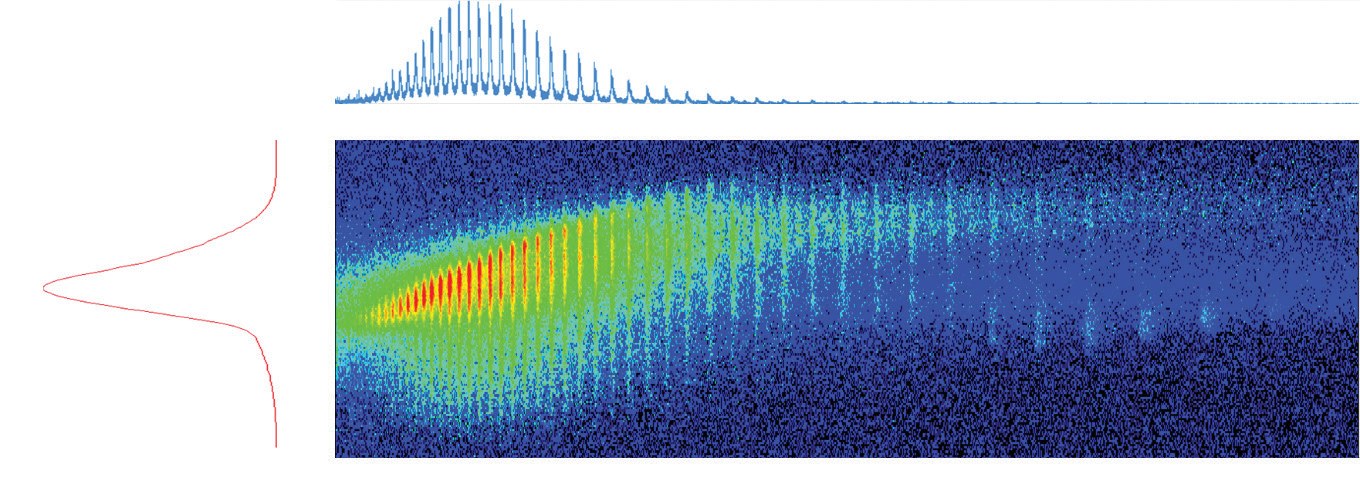
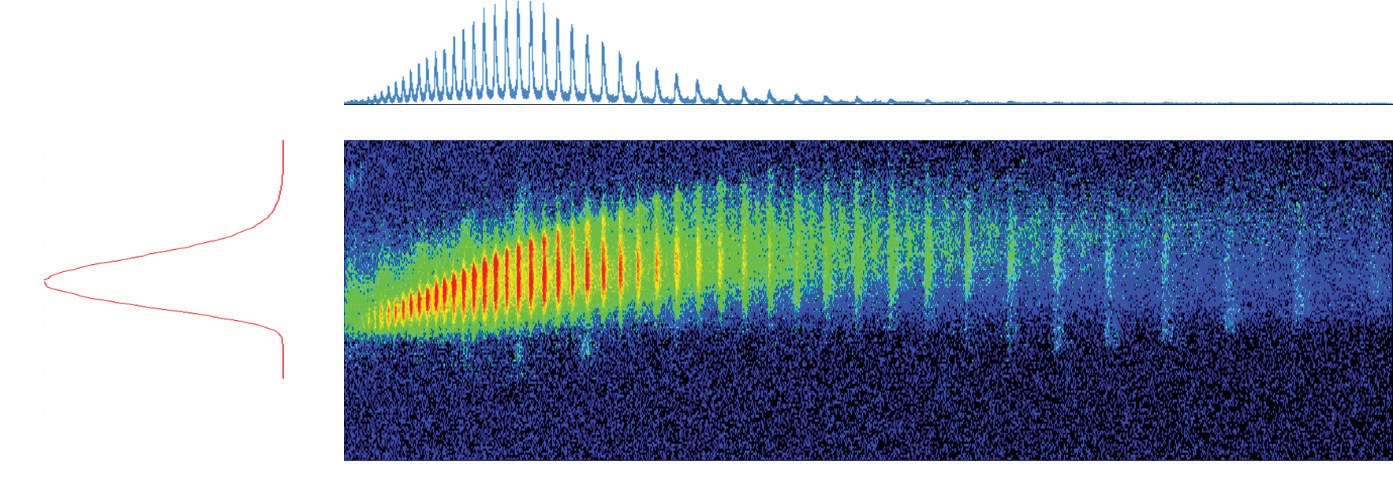
- Acquisition rate is 10 spectra/s; the documented BSA multimer analysis resolves monomer through tetramer charge-1 species at m/z 66,435 / 132,869 / 199,303 / 265,737.
- Auto-MS/MS parameters in the phosphorylation workflow: collision energy slope 3.1 and offset 3.6, isolation width 4 m/z, max 3 precursors per cycle, MS/MS threshold 1000 counts, peptides isotope model.
- Funnel and drift-tube voltages documented: high-pressure funnel RF 100 V, trap funnel RF 100 V, drift tube exit 250 V; high-pressure and trapping funnel voltages 200 V in the BSA method.
Installation and operation
- The phosphorylation workflow pairs the instrument with an Infinity II 1290 binary pump, Infinity UHPLC Nanodapter (G1988A), nanospray source (G1992A), and AssayMAP Bravo sample preparation; mobile phases cited are 150 mM ammonium acetate and 0.1% formic acid.
- Autosampler temperature 4 °C and column temperature 45 °C are the documented operating setpoints; pumping speed 266 nL/min reflects the nanospray low-flow regime.
- Injection volumes in the documented methods range from 2 µL (PhosphoMixes) to 11 µL (digested α-casein), with 5 µL for phosphopeptide enrichment eluate.
Integration & Operating Notes
When the drift-tube separation is engaged the documented mass range becomes 50–1,700 m/z rather than the 100–1,700 m/z of standard MS acquisition, so method mass windows must be set against the mode actually used.
Documented values include high-pressure funnel RF 100 V, trap funnel RF 100 V, drift tube exit 250 V, and 200 V funnel voltages in the BSA method; these are tuned per method and must be carried into the acquisition method rather than assumed as defaults.
The documented phosphorylation method triggers MS/MS only above 1000 counts, allows at most 3 precursors per cycle, and uses a 4 m/z isolation width with collision energy slope 3.1 and offset 3.6; changing any of these alters which species are fragmented.
The nanospray source (G1992A) and Infinity UHPLC Nanodapter (G1988A) are distinct accessories cited in the workflows; they are not part of the base instrument delivery and must be specified separately when configuring a nanospray system.
Selection & Integration Q&A
Pick the 6560 when gas-phase ion mobility separation is required, e.g. resolving BSA multimers or phosphopeptide isomers; its 80 cm drift tube adds a dimension the 6530 Q-TOF lacks. The 6230 TOF covers 800–8,000 m/z for large-mass work, and the 6475/6495 triple quads suit targeted quantitation instead.
The phosphorylation workflow uses an Infinity II 1290 binary pump, Infinity UHPLC Nanodapter (G1988A), nanospray source (G1992A), and AssayMAP Bravo for sample prep, with 150 mM ammonium acetate and 0.1% formic acid mobile phases at 266 nL/min.
The nanospray ion source (G1992A) and Infinity UHPLC Nanodapter (G1988A) are cited as separate accessories in the application workflows, along with the AssayMAP Bravo sample-prep system; none are part of the base 6560 delivery and must be specified in the configuration.
Dimensional Drawings & Technical Documentation
Dimensional drawings
Click drawing to inspect vector dimensions