
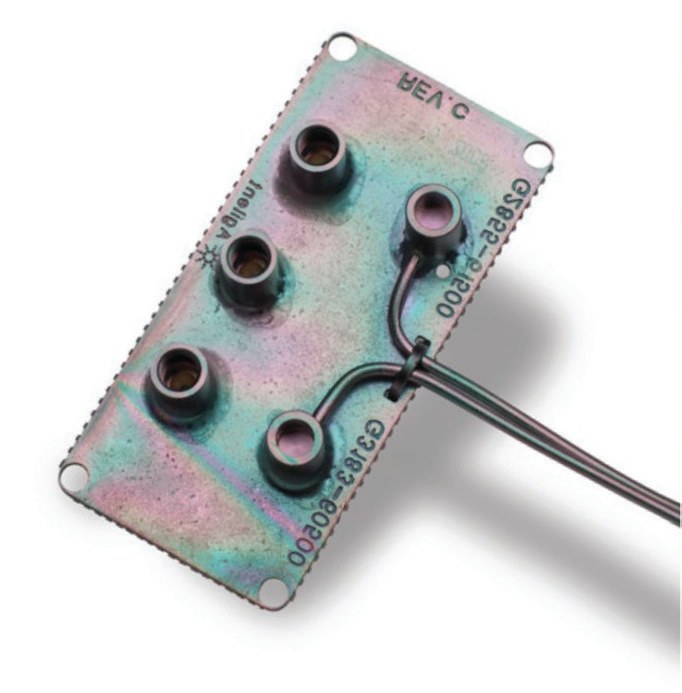
Agilent Technologies 7000E GC/TQ
Agilent Technologies 7000E GC/TQ — Gas chromatography mass spectrometry gc ms with Pumping speed 6×10⁻⁵ m³/h.
The 7000E GC/TQ is a triple quadrupole GC/MS/MS system built around an 8890, Intuvo 9000, or 7890 GC and an EI/CI-capable MS/MS analyzer with a 15 m × 0.25 mm × 0.25 µm first column and mid-column backflush. It targets 10-minute, 203-compound pesticide screens at 3–100 ppb with 70–120% recovery and ≤20% RSD, and sits between the single-quad 5977C and the higher-end 7010D/Q-TOF siblings.
Agilent Technologies GC MS Instruments Series — Model Comparison & Selection
| Model | Pumping speed, m³/h | Carrier gas | Transfer line temperature, °C | Sample volume, milliliter | Ion source temperature, °C | Analysis time, min |
|---|---|---|---|---|---|---|
| 7000E GC/TQ Current | 6×10⁻⁵ | Helium | 300 | 0.002 | 280 | 10 |
| 5977C GC/MSD | 1 | Hydrogen | 230 | 3×10⁻⁴ | 230 | 7.5 |
| 7010D GCMS | — | Helium | 300 | 0.002 | 280 | — |
| Quadrupole Time-of-Flight GC/MS, Mass Screening GC/Q-TOF | — | 1.5 | 280 | — | — | — |
Full specifications
| Pumping speed | 1 mL/min |
| Analysis time | 10 min |
| Carrier gas | Helium |
| Collision Gas (nitrogen) | 1.5 mL/min |
| Column 1 Diameter | 0.25 mm |
| Column 1 Film Thickness | 0.25 µm |
| Column 1 Flow | 1.016 ml/min |
| Column 2 Diameter | 0.25 mm |
| Column 2 Flow | 1.216 ml/min |
| Column Film Thickness | 0.25 µm |
| Drying time | five to six minutes |
| Electron Energy | 70 eV |
| Extraction Solvent Volume | 10 ml |
| Gain | 10 decibel |
| High Vacuum Pressure | 1.11 Torr |
| Maximum Column Id | 0.53 mm |
| Oven Ramp 1 Rate | 80 °C/min |
| Oven Ramp Rate 2 | 35 °C/min |
| Purge Flow To Split Vent | 50 mL/min |
| Quench Gas (helium) | 2.25 mL/min |
| Rough Vacuum | 1.58 mTorr |
| Sample volume | 1.5 µL |
| Septum Purge Flow | 3 ml/min |
| Switching Time | 4.9 min |
| Total Run Time | 10 min |
| Number of target pesticides mfr | 197 |
| Analytical system mfr | 3 GC/MSD |
| Sample matrix mfr | 1 ratio |
| Recovery criterion mfr | 70...120 |
| Precision criterion (RSD) mfr | 20 |
| Quantification limit range mfr | 3...100 ppb |
| MRM database size mfr | 1100 compounds |
| MRMs per compound mfr | 10 MRMs |
| Carrier gas and flow rate mfr | 1 flow |
| Tune mfr | Etune: atunes.eiex.tune.xml s.eiex.tune.xml |
| Cleaning interval mfr | 350...400 injections |
| Number of compounds covered mfr | 203 compounds |
| Conventional reference method duration mfr | 20 min |
| Post-run time mfr | 1.5 min |
| Recovery range (SANTE criterion) mfr | 70...120 |
| Precision (RSD) limit mfr | 20 |
| Quantification range mfr | 3...100 ppb |
| MRM database compounds mfr | 1100 compounds |
| Sample matrix ratio (pulp:shell) mfr | 1 ratio |
| Number of compounds mfr | 203 |
| High-vacuum pump mfr | Split flow turbo turbo |
| Optimal He column gas flow, mL/min (carrier gas) mfr | 1...2 |
| Reagent gas flow, mL/min mfr | 1...2 |
| Maximum recommended gas flow, mL/min* mfr | 4...6 |
| Maximum gas flow, mL/min† mfr | 6.5 |
| JetClean option H2 flow mfr | 0.4 mL/min |
| Autotune mfr | Yes Yes |
| Check the foreline pump oil level mfr | Every week week |
| Check the calibration vial(s) mfr | 6 months |
| Replace the foreline pump oil* mfr | 6 months |
| Replace dry scroll pump tip seals mfr | Every year year |
| Tune the MS mfr | As needed needed |
| Check the foreline pump mfr | As needed needed |
| Clean the ion source mfr | As needed needed |
| Check the carrier gas trap(s) on the GC and MS mfr | As needed needed |
| Replace the worn out parts mfr | As needed needed |
| Lubricate side plate or vent valve O-rings† mfr | As needed needed |
| Replace GC gas supplies mfr | As needed needed |
| Leak check the system mfr | As needed needed |
| Not shown mfr | HES assembly assembly |
| Hydrogen combustible lower limit mfr | 4 |
| Hydrogen combustible upper limit mfr | 74.2 |
| Turbo pump speed at 10-15 min mfr | 80 |
| Turbo pump final speed mfr | 95 |
| CI bakeout time mfr | 2 hours |
| Ultrasonic cleaning time per solvent mfr | 15 minutes |
| Syringe Type mfr | 10 μL |
| Column Pneumatics mfr | Constant flow flow |
| Injector Mode mfr | Cold splitless splitless |
| Injector Liner mfr | Agilent Ultra Inert fritted splitless liner line |
| Equilibration Time mfr | 3 min |
| Acquisition Mode mfr | dMRM dMRM |
| Column 1 flow rate mfr | 1.28 mL/min |
| Column 2 flow rate mfr | 1.54 mL/min |
| Oven equilibration time mfr | 3 min |
| Calibration range mfr | 3...100 ppb |
| Post-spike concentration mfr | 10 ppb |
| Replicate injections for precision mfr | 10 |
| Purge-Fluss zum Splitauslass mfr | 60 min |
| Septumspülungs-fluss mfr | 3 ml/min |
| Modus Septumspülungsfluss mfr | Geschaltet Geschaltet |
| Injektionsvolumen mfr | 1.0 μl |
| Injektionstyp mfr | Standard Standard |
| L1 Airgap mfr | 0.2 μl |
| Gassparfluss mfr | 30 min |
| Gesamtfluss Nachlauf mfr | 25 ml/min |
| Trägergas mfr | Helium Helium |
| Einlass-Liner mfr | 2 rwirbelungszone |
| Einlass-Liner Bestellnummer mfr | 5190 |
| Anfängliche Ofen-Haltezeit mfr | 1 min |
| Anstiegsrate 1 mfr | 80 °C/min |
| Anstiegsrate 2 mfr | 35 °C/min |
| Gesamtlaufzeit mfr | 10 min |
| Nachlaufzeit mfr | 1.5 min |
| Äquilibrierungszeit mfr | 0.25 min |
| Agilent Bestellnummer mfr | 19091 KEY |
| Durchmesser mfr | 0.25 mm |
| Filmdicke mfr | 0.25 μm |
| Steuerungsmodus mfr | Konstanter Fluss Fluss |
| Fluss mfr | 1016 ml/min |
| Gas saver flow mfr | 30 ml/min |
| Total post-run flow mfr | 25 ml/min |
| Initial oven hold time mfr | 1 min |
| PSD purge flow mfr | 5 ml/min |
| Solvent delay mfr | 3 min |
| Total MRM transitions mfr | 614 |
| Maximum simultaneous MRM mfr | 127 |
| Raw extract volume for cleanup mfr | 3 ml |
| Number of consecutive injections mfr | 700 |
| Column 1 Inner Diameter | 0.25 mm |
| Column 1 Length | 15 m |
| Column Length | 15 m |
| Depth | 86 cm |
| Foreline Pump Weight | 22.2 kg |
| Height | 47 cm |
| Length | 15 m |
| Weight | 59 kg |
| Width | 35 cm |
| Mainframe weight (turbo) mfr | 59 kg |
| Mainframe weight (with CI) mfr | 64 kg |
| Spinach sample mass mfr | 10 g |
| EM voltage gain mode mfr | 10 |
| GC/MS interface typical setpoint mfr | 280 °C |
| Final Temperature 2 | 310 °C |
| Initial Oven Temperature | 80 °C |
| Inlet Temperature | 310 °C |
| Ion Source Temperature | 280 °C |
| Ms Quadrupole Temperature | 150 °C |
| Quad Temperature | 150 °C |
| Sound pressure | 70 dB |
| Transfer Line Temperature | 300 °C |
| Internal standard mfr | Chlorpyrifos- |
Description
Construction and series positioning
- The 7000E is the triple-quadrupole member of the Agilent GC/MS line: a tandem MS analyzer coupled to an 8890, Intuvo 9000, or 7890 GC (User Manual, G7006-90006).
- It is distinguished from the single-quadrupole 5977C GC/MSD by its MS/MS capability and from the 7010D GCMS and Q-TOF by its role as the mid-tier TQ; the 7010 series appears in the same application notes as the helium-carrier alternative to the 7000E's hydrogen-carrier Deans-switch configuration.
- The analyzer is a benchtop unit measuring 35 cm wide × 47 cm high × 86 cm deep and weighing 59 kg; the foreline pump adds 22.2 kg and is a separate item.
- The MS must remain upright at all times and should not be left vented to atmosphere for long periods (User Manual, p. 31).
Behavior under load and in different modes
- In EI mode the source runs at 280 °C, the quadrupole at 150 °C, the transfer line at 300 °C and the inlet at 310 °C; electron energy is 70 eV.
- The documented fast pesticide method uses an 80 °C initial oven, a first ramp of 80 °C/min to 170 °C, a second ramp of 35 °C/min to 310 °C, and a 1.5 min post-run, giving a 10-minute analysis for 203 compounds.
- Carrier gas is helium at 1.016 mL/min on column 1 and 1.216 mL/min on column 2; collision gas nitrogen is 1.5 mL/min and quench helium 2.25 mL/min; purge flow to split vent is 50 mL/min.
- Rough vacuum is 1.58 mTorr and high vacuum 1.11; typical EI high-vacuum readings vary by up to 30% between instruments, so the table is a guide, not an absolute specification (User Manual, p. 106).
- CI mode is available as a preconfigured system or upgrade kit, with reagent gases isobutane, ammonia and carbon dioxide; switching between CI and EI sources takes about 1 hour plus 1–2 hours to purge reagent lines and bake out, and PCI-to-NCI switching needs about 2 hours for the source to cool (User Manual, p. 17).
Installation, control and operation
- Column installation differs by GC: 8890 and 7890 use split/splitless inlet mounting, a GC/MS interface connection with self-tightening or standard column nuts, and an interface tip seal; Intuvo 9000 uses column and gasket replacement plus guard/jumper chips and a 9000 GC/MS tail.
- Pumpdown is monitored: turbo speed should reach 80% within 10–15 minutes and eventually 95%; otherwise the MS electronics shut off the foreline pump and a power cycle is required (User Manual, p. 121).
- High-temperature pumpdown bake-out sets source/MS1/MS2 to 230/150/150 °C; otherwise 100/100/100 °C (User Manual, p. 121).
- Hydrogen safety governs plumbing and startup: total H2/methane flow to the MS must never exceed 50 mL/min including column and reagent gas, and before pumpdown with hydrogen plumbed the analyzer/sideplate doors are opened 45° or more for 10 minutes before power-on (User Manual, p. 24).
Integration & Operating Notes
Column flow plus any reagent gas must stay at or below 50 mL/min total; exceeding it creates an explosion hazard in the analyzer. Budget column 1 (1.016 mL/min) and column 2 (1.216 mL/min) flows plus CI reagent gas against this ceiling before commissioning.
Use a regulator set below 5 psig and keep the ammonia tank upright and below the flow module to prevent condensation. A 5% ammonia/95% helium or 5% ammonia/95% methane mix is frequently used to limit ammonia's negative effects while retaining good CI.
When ammonia is used 5 or more hours a day, ballast the foreline pump for at least 1 hour daily to minimize damage to pump seals, and purge the MS with methane after ammonia use. Plan this into the daily schedule rather than treating it as occasional maintenance.
Within 10–15 minutes of pumpdown the turbo should reach 80% and eventually 95%. If these conditions are not met, the MS electronics shut off the foreline pump and a power cycle is required, so monitor speed during every startup rather than assuming pumpdown succeeded.
The instrument must remain upright at all times and should not be left vented to atmosphere for long periods. Plan rigging, storage and service windows so the analyzer is neither tipped nor left open, since either condition risks damage to the analyzer.
If power fails while unattended, even if restarted: turn off hydrogen at source, turn off GC, turn off MS and cool 1 hour, eliminate ignition sources, open the vacuum manifold to atmosphere, wait at least 10 minutes, then start normally. Skipping steps risks ignition of accumulated hydrogen.
Check foreline pump fluid weekly, replace oil every 6 months or as needed, and expect pump replacement about every 3 years. Check calibration vials every 6 months, replace dry scroll pump tip seals yearly, and perform a system leak check monthly or as needed, especially with hydrogen carrier.
Switching between CI and EI sources takes about 1 hour plus 1–2 hours to purge reagent gas lines and bake out contaminants; PCI-to-NCI switching needs about 2 hours for source cooling. Sequence method development so these transitions do not fall inside a sample run.
Selection & Integration Q&A
Pick the 7000E when you need MS/MS selectivity and sensitivity for multi-residue work such as 203 pesticides in 10 minutes at 3–100 ppb. The 5977C single quad lacks MS/MS; the 7010D is the higher-tier TQ used in the same application notes, for example with helium carrier where the 7000E configuration used hydrogen.
Provide helium carrier at 1.016 mL/min on column 1 and 1.216 mL/min on column 2, nitrogen collision gas at 1.5 mL/min, quench helium at 2.25 mL/min, and 50 mL/min purge to split vent. If hydrogen is plumbed, total H2/methane to the MS must stay at or below 50 mL/min.
Keep the MS upright at all times and do not leave it vented to atmosphere for long periods. Use only Agilent-approved foreline pumps purchased under GC/MS part numbers with the supplied inlet valve; operate Pfeiffer Duo/MVP and Edwards RV5 pumps with gas ballast closed. Keep the CC chamber shipping brackets fastened and remove the plastic window cover.
Plan weekly pump-fluid checks, oil changes every 6 months, pump replacement about every 3 years, calibration-vial checks every 6 months, yearly dry scroll tip seals, and monthly leak checks. The 22.2 kg foreline pump, columns, interface tip seals, column nuts and CI source kit are separate items, not part of the base MS delivery.