
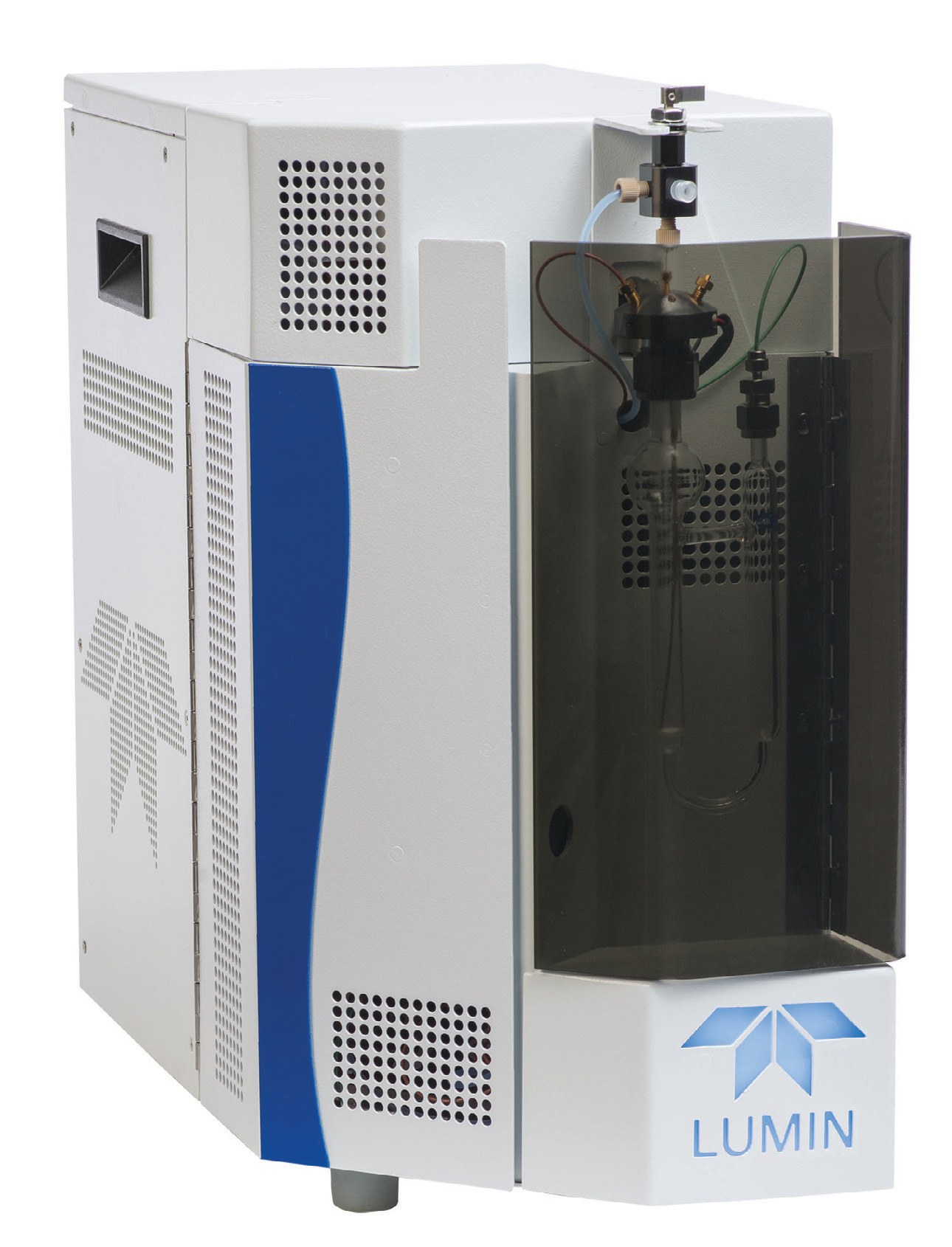
Agilent Technologies purge and trap, volatile organic compounds analysis
Agilent Technologies purge and trap, volatile organic compounds analysis — Gas chromatography.
Purge-and-trap concentrator configuration for VOC water analysis, defined by a timed sequence of purge, dry-purge, desorb and bake phases. It is distinguished within the series by a 20 °C purge at 40 mL/min, 250 °C desorb and 280 °C bake, with a 0.5–50 ppb calibration range. It serves as the sample-introduction front end to a GC or GC/MS for EPA 5030/8260, 524.2 and 624 methods.
Agilent Technologies GC Sample Preparation Introduction Series — Model Comparison & Selection
| Model | Sample volume, milliliter | Analysis time, min | Bake flow, mL/min | Bake temperature, °C | Bake time, min | Calibration concentration, µg/ml |
|---|---|---|---|---|---|---|
| purge and trap, volatile organic compounds analysis Current | — | — | 200 | 280 | 2 | — |
| GC autosampler, GC sample injection | 0.001 | 80 | — | — | — | 100 |
| PAL3 autosampler, automated solid phase extraction | — | — | — | — | — | — |
| Reliable, consistent GC introduction of liquefied gases | — | — | — | — | — | — |
Full specifications
| Bake Flow | 200 mL/min |
| Bake Time | 2.00 min |
| Drain Flow | 300 mL/min |
| Dry Purge Flow | 100 mL/min |
| Presweep Time | 0.25 min |
| Purge Flow | 40 mL/min |
| Purge Time | 11.00 min |
| Rinse Loop Time | 0.30 min |
| Sample Loop Time | 0.35 min |
| Sample Transfer Time | 0.35 min |
| Standby Flow | 20 mL/min |
| Sweep Needle Time | 0.30 min |
| Desorb time mfr | 1.00 min |
| Bake rinse drain cycles mfr | 1 |
| Bake rinse drain time mfr | 0.35 min |
| Calibration range mfr | 0.5...50 ppb |
| Dry purge time mfr | 1.00 min |
| Bake Temperature | 280 °C |
| Desorb Preheat Temperature | 245 °C |
| Dry Purge Temperature | 20 °C |
| Mcs Bake Temperature | 200 °C |
| Mcs Purge Temperature | 20 °C |
| Purge Ready Temperature | 35 °C |
| Purge Temperature | 20 °C |
| Sample Mount Temperature | 90 °C |
| Transfer Line Temperature | 150 °C |
| Valve Oven Temperature | 150 °C |
| Water Temperature | 90 °C |
Description
Construction and positioning
- This is the purge-and-trap concentrator modification of the sampler series; the sibling models are the 7650A and 7693A liquid samplers, the 7697A headspace sampler and the 7820A GC system. Choose this unit when the analytes are volatile organics in water and the method requires purge-and-trap concentration rather than liquid injection or headspace equilibration.
- The working sequence is temperature- and flow-programmed: sample purge at 20 °C and 40 mL/min, optional dry purge, desorption at 250 °C with a 245 °C preheat, and a 280 °C bake at 200 mL/min for 2.00 min.
Behavior across the cycle
- Purge is held for 11.00 min at 40 mL/min; the dry-purge step is configured at 0 mL/min and 20 °C with a 0 min dry-purge time, i.e. it is effectively disabled in this configuration. Desorption follows a 1.00 min desorb step at 250 °C.
- Bake is the hottest phase at 280 °C with 200 mL/min bake flow; the condenser bakes at 180 °C and the MCS bake is set to 200 °C. The bake rinse drain cycle is 1 with a 0.35 min drain time.
- Transfer and valve-oven temperatures are both 150 °C; the sample mount and water temperatures are both 90 °C. The purge-ready temperature is 35 °C, so the next cycle can begin before the trap returns to ambient.
Timing and control
- The valve/loop sequence is short and fixed: presweep 0.25 min, rinse loop 0.30 min, sample loop 0.35 min, sample transfer 0.35 min and sweep needle 0.30 min. Standby flow is 20 mL/min and drain flow 300 mL/min.
- The calibration range is 0.5–50 ppb. The attached application notes describe the same concentrator family coupled to an Agilent 7890B GC/MS with an AQUATek 100 autosampler for EPA Methods 8260, 524.2 and 624; they document method conditions, not ordering data.
Integration & Operating Notes
Dry-purge flow is set to 0 mL/min at 20 °C with a 0 min dry-purge time, so no trap drying occurs between purge and desorb. For water samples with high moisture load, confirm with the method whether trap drying is needed; otherwise water carryover reaches the desorb step and the GC column.
The bake phase runs at 280 °C while desorption is at 250 °C with a 245 °C preheat. Trap and transfer hardware must tolerate the 280 °C bake; the transfer line and valve oven are held at 150 °C, so the temperature gradient along the path must be checked to avoid cold spots condensing heavy VOCs.
The sequence uses a 35 °C purge-ready temperature rather than a full cooldown, so cycle timing depends on the controller honoring this setpoint before re-opening the sample loop. The fixed valve timings (presweep 0.25 min, rinse loop 0.30 min, sample loop 0.35 min, transfer 0.35 min, sweep needle 0.30 min) must be sequenced by the GC/autosampler controller.
The bake rinse drain is configured as 1 cycle of 0.35 min at a 300 mL/min drain flow. If the drain line or condenser fouls, residual water remains in the trap path; verify drain flow and condenser bake (180 °C) at each preventive-maintenance interval rather than adding cycles ad hoc.
The stated calibration range of 0.5–50 ppb applies to the purge-and-trap water method. Samples above 50 ppb require dilution or a reduced purge volume; the application notes for EPA 8260, 524.2 and 624 document the calibration and MDL data on this concentrator family with an Agilent 7890B GC/MS.
Selection & Integration Q&A
Pick this unit for volatile organics in water requiring EPA 5030/8260, 524.2 or 624 purge-and-trap concentration at 0.5–50 ppb. The 7697A headspace sampler suits volatile organics in solid or viscous matrices without a purge step, and the 7693A liquid sampler is for direct liquid injection, not trace water VOCs.
The documented configuration couples the concentrator to an Agilent 7890B GC with a 5977A MS and an AQUATek 100 autosampler. The transfer line and valve oven are held at 150 °C, so the GC inlet and column must accept a 150 °C transfer path; confirm the MS source and column choice against the method tables in the application notes.
Plan for trap replacement and condenser cleaning: the condenser bakes at 180 °C and the bake rinse drain is a single 0.35 min cycle at 300 mL/min, so drain-line fouling shows up as residual water. The base unit does not include the autosampler, GC/MS, columns or calibration standards; these are separate items per the application notes.